Homily – Fr Lawrence – Easter Homily – 4/5/26
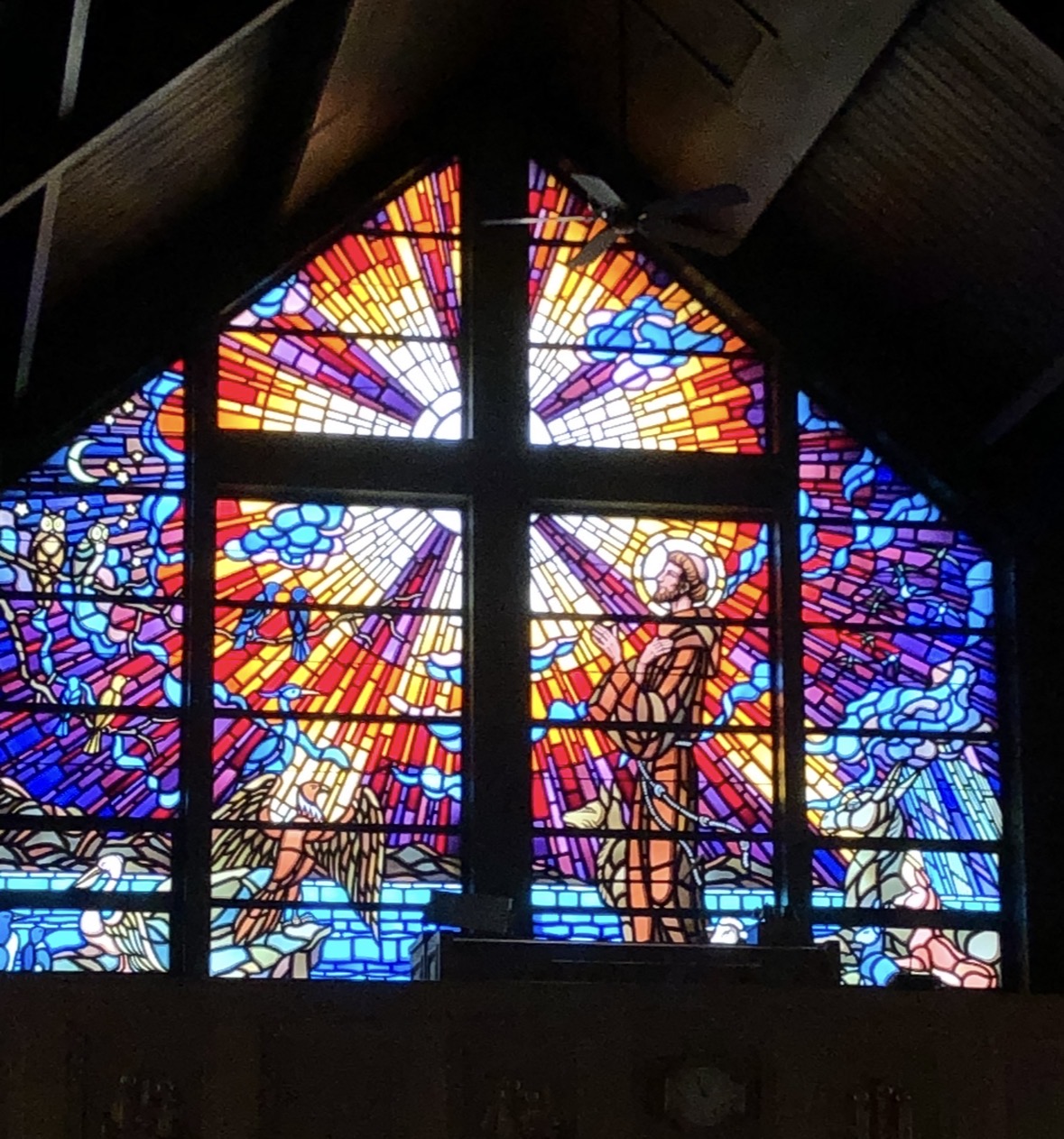
Fr. Lawrence – Easter Homily
Dear brothers and sisters – Happy Easter! We’ve been waiting and fasting for 40 days and 40 nights, following Jesus on his way to his suffering and death. And for the past three days we have walked beside Jesus step by step as he suffered crucifixion and death. We’ve participated through the passion narratives, through the starkness of the empty tabernacle and the sparse liturgy. And last night, we had a big fire, re-lit the lights, sang the Gloria, bells rang, and we greeted Christ’s resurrection with the alleluia we have set aside all through Lent. So this morning as we continue our celebration and look for Jesus raised from the dead, we are greeted with – an empty tomb. Where’s Jesus? He doesn’t make an appearance in any of our readings today. In Acts, Peter talks about him, repeats the story we’ve already heard, but Jesus himself is absent. The psalm refers to the stone which the builders rejected, which Jesus used to describe himself, but this is only a reference. The letter to the Colossians is not much help – Christ is out of reach, up in heaven, seated at the right hand of God, to appear some time in an undetermined future. And of course the Gospel has only an empty tomb where Jesus is supposed to be.
I had a friend in AA, Bernie, who once said that he had lived most of his life with a huge hole in his center. He tried to fill that hole with all kinds of things, food, distraction, sex, drugs, alcohol, but nothing worked. The hole stayed empty. It was only after he was sober for a while that he discovered that this hole was exactly God-sized.
This is the paradox we live with. I would guess that most of us sitting here today have had some personal encounter with Christ. That’s why we joined the monastery, that’s why we come to church. Christ is real and alive for us. But probably most of us have also experienced Christ’s absence. We have prayed for something, for that job we desperately needed, for someone we loved to be healed, and it has not happened. We reach for Christ and he’s not there, all we find is an empty tomb, an emptiness inside our own hearts.
But this emptiness, this absence, is also God. It says somewhere that Christ emptied himself, taking the form of a servant. He did this in order to suffer and die for us, but also perhaps to give us an example. The whole of monastic life, all of our practices, the horarium, the work we do, the imperfect brothers we live with, our own imperfections and brokenness, is meant to lead us to empty ourselves, to set aside our own preferences, opinions, our wills and desires. This creates in us the emptiness that God can then work with. But surprisingly the result is that we don’t become faceless nobodies as this happens, cookie-cutter versions of the perfect monk, but more ourselves, the men and women that God created us to be.
Getting back to the letter to the Colossians, there is a very curious line. It says, “For you have died, and your life is hidden with Christ in God.” Of course I don’t know exactly what this line means, but we can reflect on it for a moment. Christ died and afterwards remained hidden, in the empty tomb, in the various disguises of the post-resurrection appearances. If we are to fully follow Christ, to imitate Christ, we too die to ourselves, to our self-will, we empty ourselves, or perhaps more accurately, we accept our littleness, our hiddenness, the emptiness that is already inside us, the empty tomb at our center, rather than trying desperately to fill it. We embrace that emptiness, which is actually God-sized.